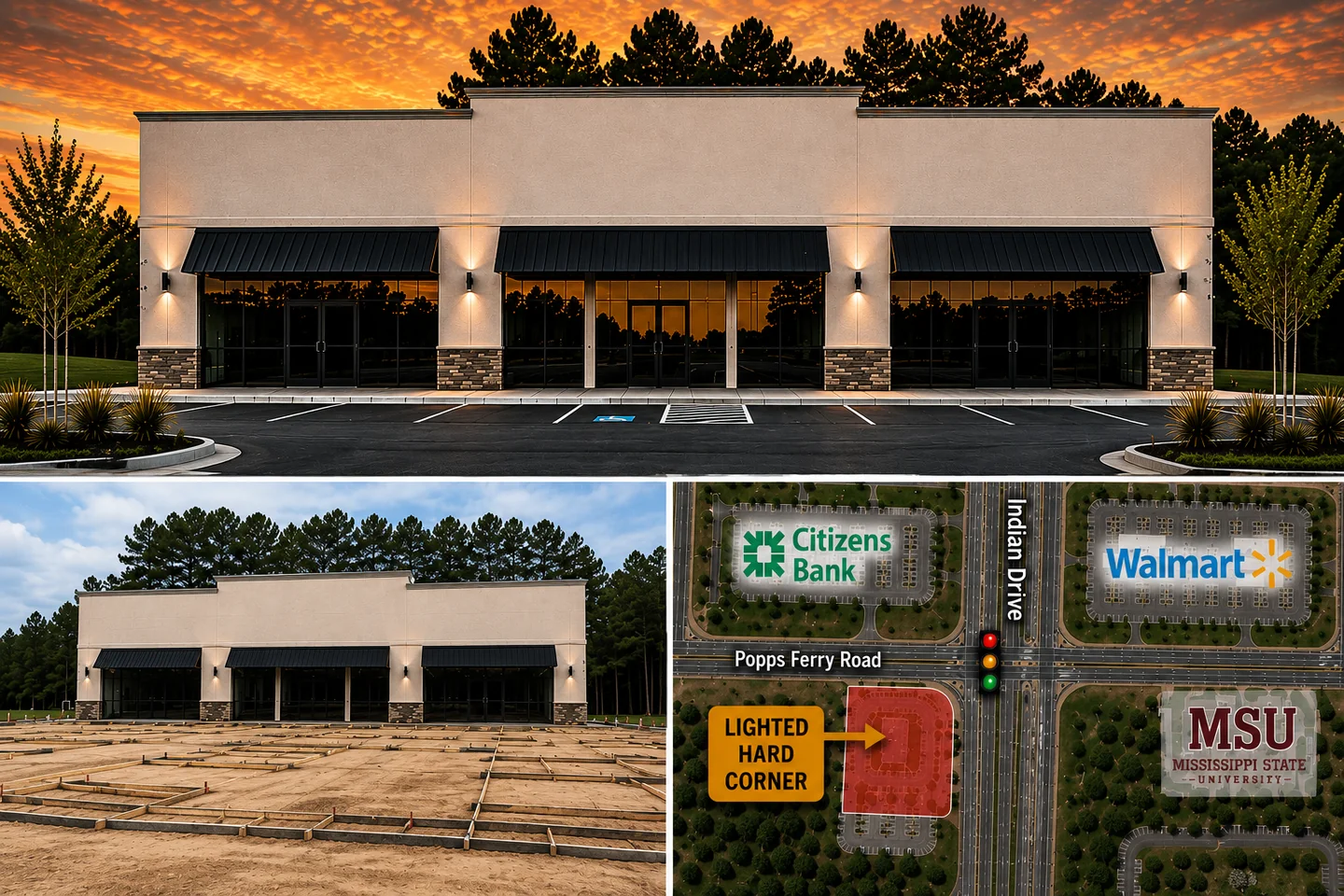

CAM fees are charges for common area maintenance: a commercial tenant’s agreed share of expenses associated with maintaining shared property areas. They may cover parking-lot upkeep, landscaping, common-area lighting, cleaning, and other costs defined in the lease. CAM is not a universal fee schedule. The signed lease determines which expenses can be charged, how they are allocated, and when they are reconciled.
For a Gulf South retailer comparing spaces, the important number is not just the advertised rent. It is the total cost of occupying the space, including the additional charges and obligations that come with it.
What can be included in CAM fees?
Depending on the lease, recoverable costs may include maintenance of shared parking and sidewalks, landscaping, cleaning, security, and common-area utilities. Management charges or certain repair costs may also appear in the lease’s operating-expense definition. Ask for that definition rather than assuming a charge is allowed because another property bills it.
Property taxes and building insurance are often additional charges in a net lease, but they are not automatically synonymous with CAM. Some landlords group these items into a combined operating-expense estimate; others show them separately. Confirm whether a quoted rate includes all three or only maintenance.
How are CAM fees calculated?
A common approach applies the tenant’s lease-defined proportionate share to eligible property expenses. A budget is used to estimate periodic payments, and actual expenses may be reconciled later. The denominator, exclusions, expense pools, and adjustments can materially change the calculation.
Illustrative example—not a quote for any Foundation Group listing: a 2,000-square-foot tenant in a 20,000-square-foot center would have a 10% share if the lease uses those areas without adjustments. If eligible annual CAM expenses are $100,000, that share is $10,000 a year, or about $833.33 a month. Expressed per tenant square foot, it is $5 annually.
Do not assume every tenant uses the same denominator. Anchor tenants, separately maintained areas, or different expense categories may have special allocations. A vacant unit does not, by itself, tell you how your own share will be treated.
CAM versus NNN: what is the difference?
CAM describes an expense category. Triple-net, or NNN, describes a lease structure that generally allocates property taxes, insurance, and maintenance costs to tenants in addition to base rent. The actual allocation still depends on the document. A gross lease may incorporate some operating costs into rent, while a modified gross lease divides them differently.
When comparing proposals, separate base rent, estimated CAM, taxes, insurance, utilities, and tenant-specific maintenance. Then identify which amounts are fixed, estimated, or subject to change. A lower base rent can be offset by higher additional charges.
What should you ask before signing?
- Which expenses are included and explicitly excluded?
- What square footage and allocation method determine your share?
- Can you review recent budgets and reconciliation statements?
- Are there administration fees, capital-cost recoveries, or gross-up provisions?
- Does an expense cap apply, and which categories are outside it?
- What records can you inspect, and what deadlines govern questions or disputes?
Pay particular attention to repairs versus replacements, landlord overhead, and costs benefiting only another tenant. Whether an item is recoverable is a lease question, not something a generic online checklist can settle.
Compare the entire occupancy budget
Build a side-by-side worksheet with the same categories for every space. Include fit-out costs, deposits, utility responsibilities, and required equipment maintenance alongside recurring charges. Ask what supports the current estimate and whether known work could affect future expenses.
Our tenant representation service can help organize site comparisons and commercial negotiations. Owners can explore landlord representation. To compare actual locations, start with our commercial listings and request the current lease terms rather than relying on a headline rate.
Next, read our CAM reconciliation checklist for the documents to request after a year-end statement arrives. Contact The Foundation Group with your target market, space requirements, and occupancy budget.
Source and scope
ICSC’s CAM guide for small businesses explains shared-area expenses, pro-rata versus fixed structures, expense caps, and the importance of reviewing lease provisions and budgets.
The U.S. Small Business Administration’s location guide explains why rent, utilities, insurance, and other location expenses belong in the business-location decision. This article is general commercial leasing education, not legal advice or a representation of any property’s CAM charges. Have qualified counsel review lease language.
Frequently asked questions
What does CAM stand for in a commercial lease?
CAM stands for common area maintenance. CAM fees allocate eligible shared-property expenses to tenants using the definitions and calculation method in their lease.
Are CAM fees included in base rent?
They may be included, separately billed, or partially included depending on the lease. Request a breakdown of base rent, CAM, taxes, insurance, and other occupancy costs before comparing spaces.
Are CAM fees the same as triple-net charges?
No. CAM is an expense category; triple-net is a lease structure generally allocating taxes, insurance, and maintenance to tenants. The lease determines what each tenant actually pays.
Can CAM fees change each year?
They can change when expenses or budgets change, subject to the lease. Any cap, exclusion, reconciliation process, or review right must be checked in the signed document.